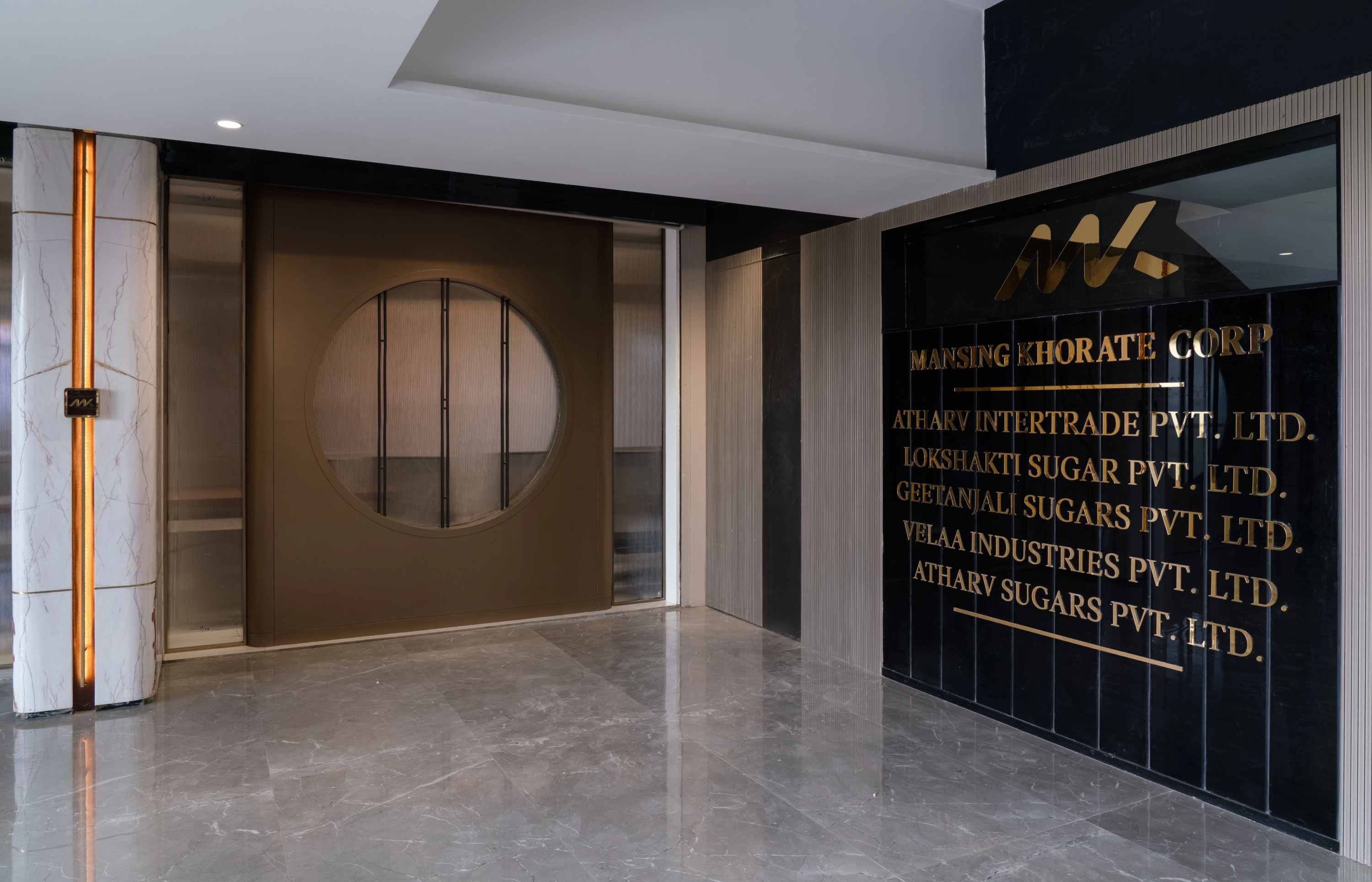
MANSING KHORATE CORP
Elixa Park, Kolhapur
Interior Design and Execution
The Collective Floor - Parametric Dialogues
In the offices of a sugar exporter, columns don't merely hold up a ceiling — they hold up a
philosophy.
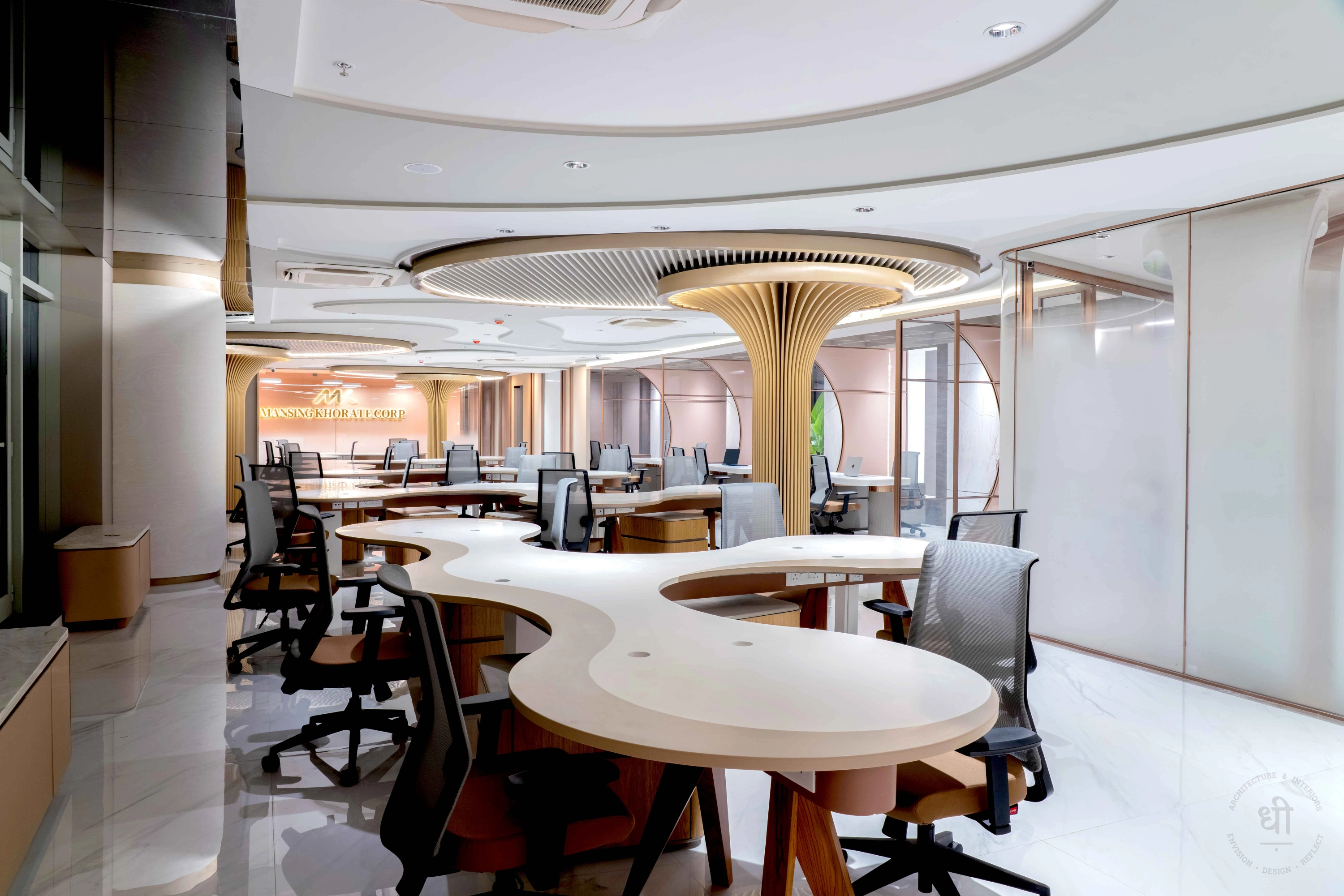
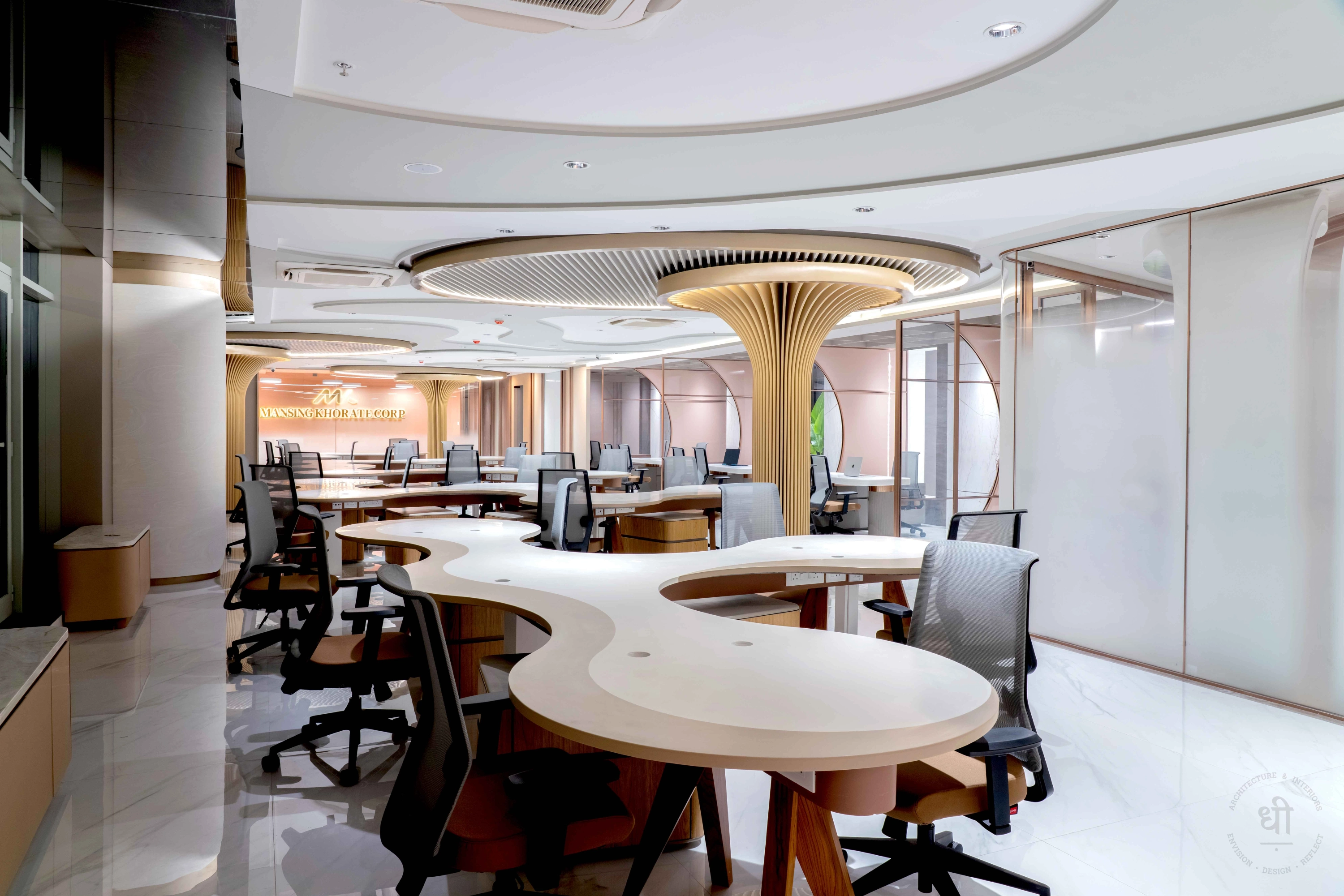
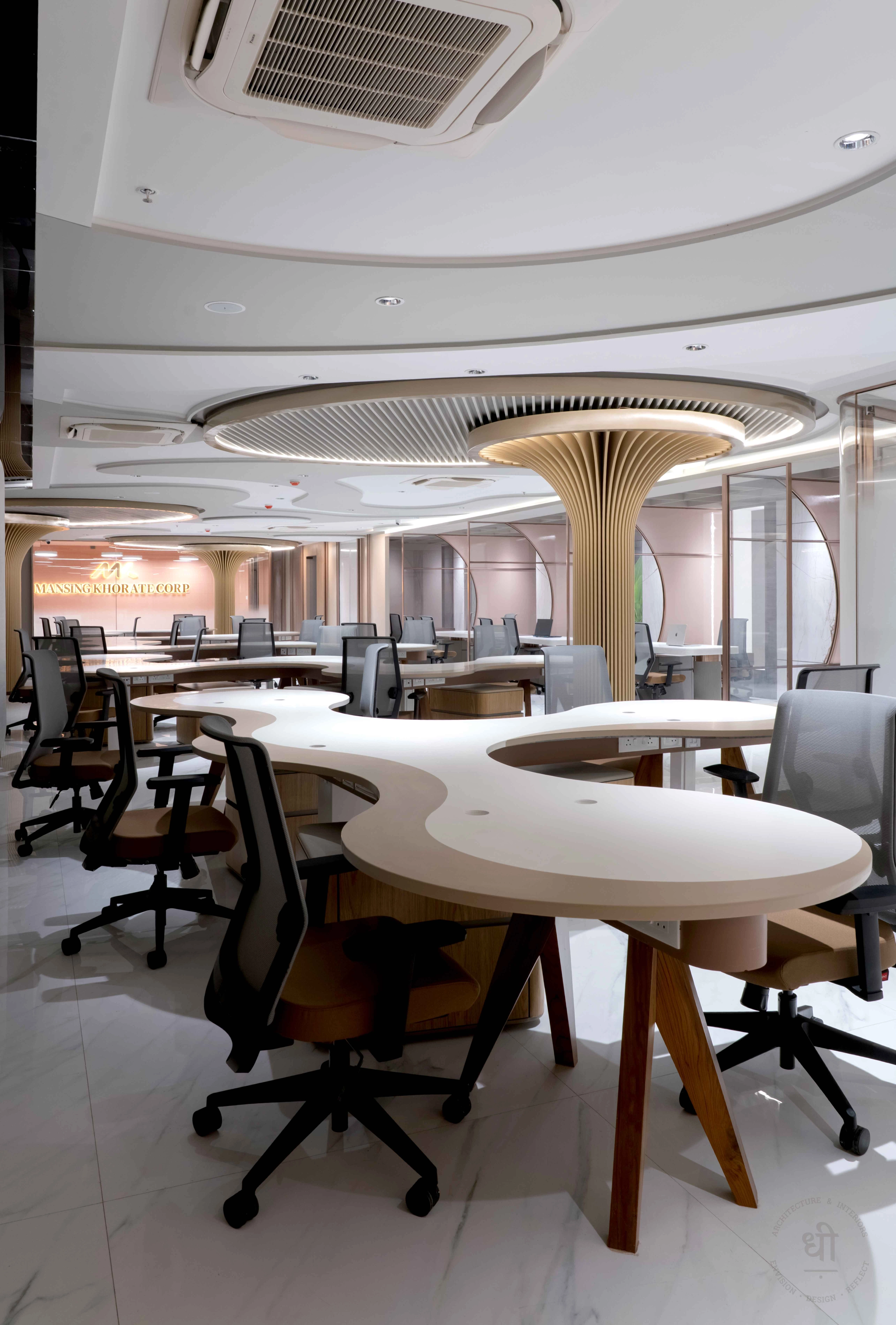
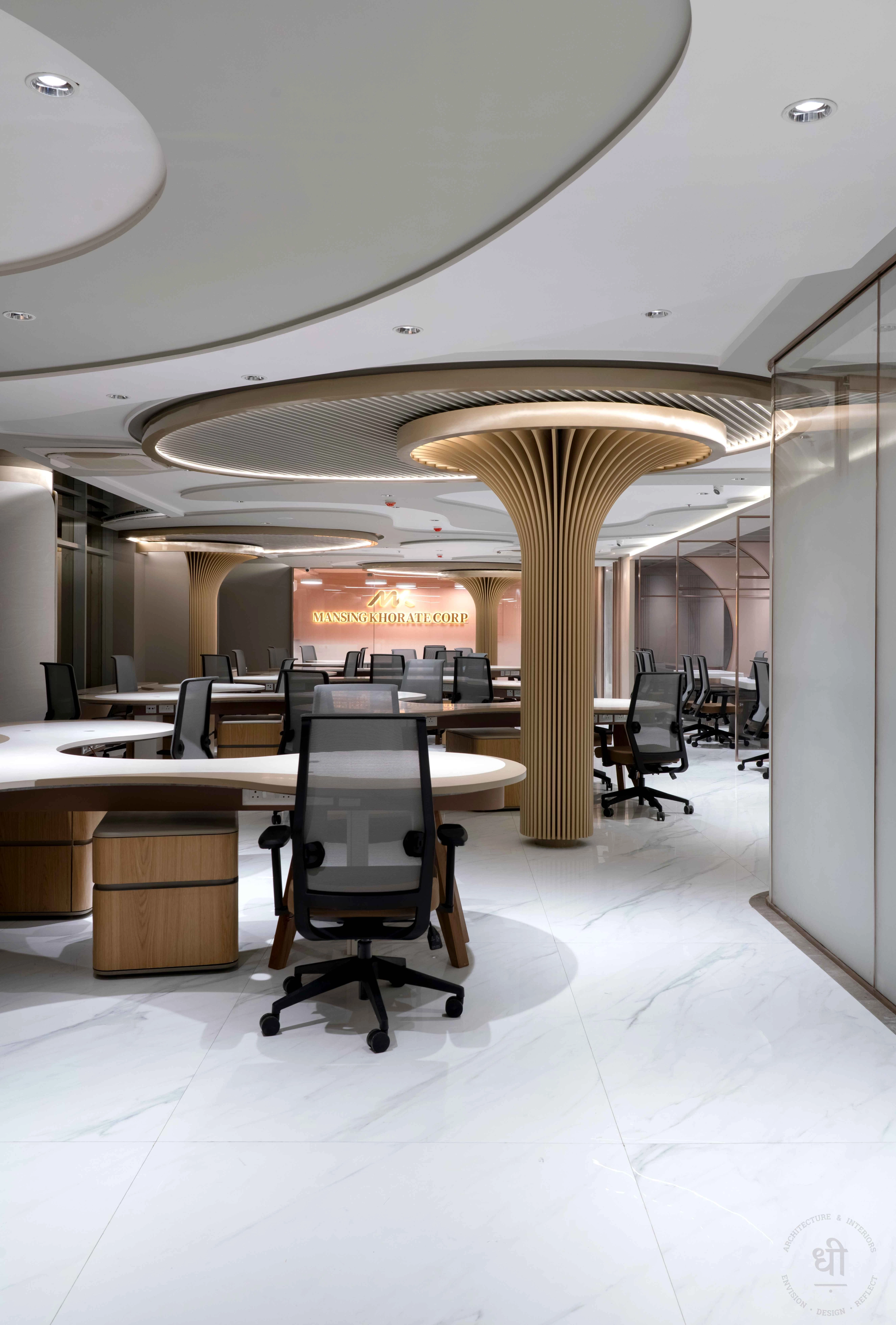
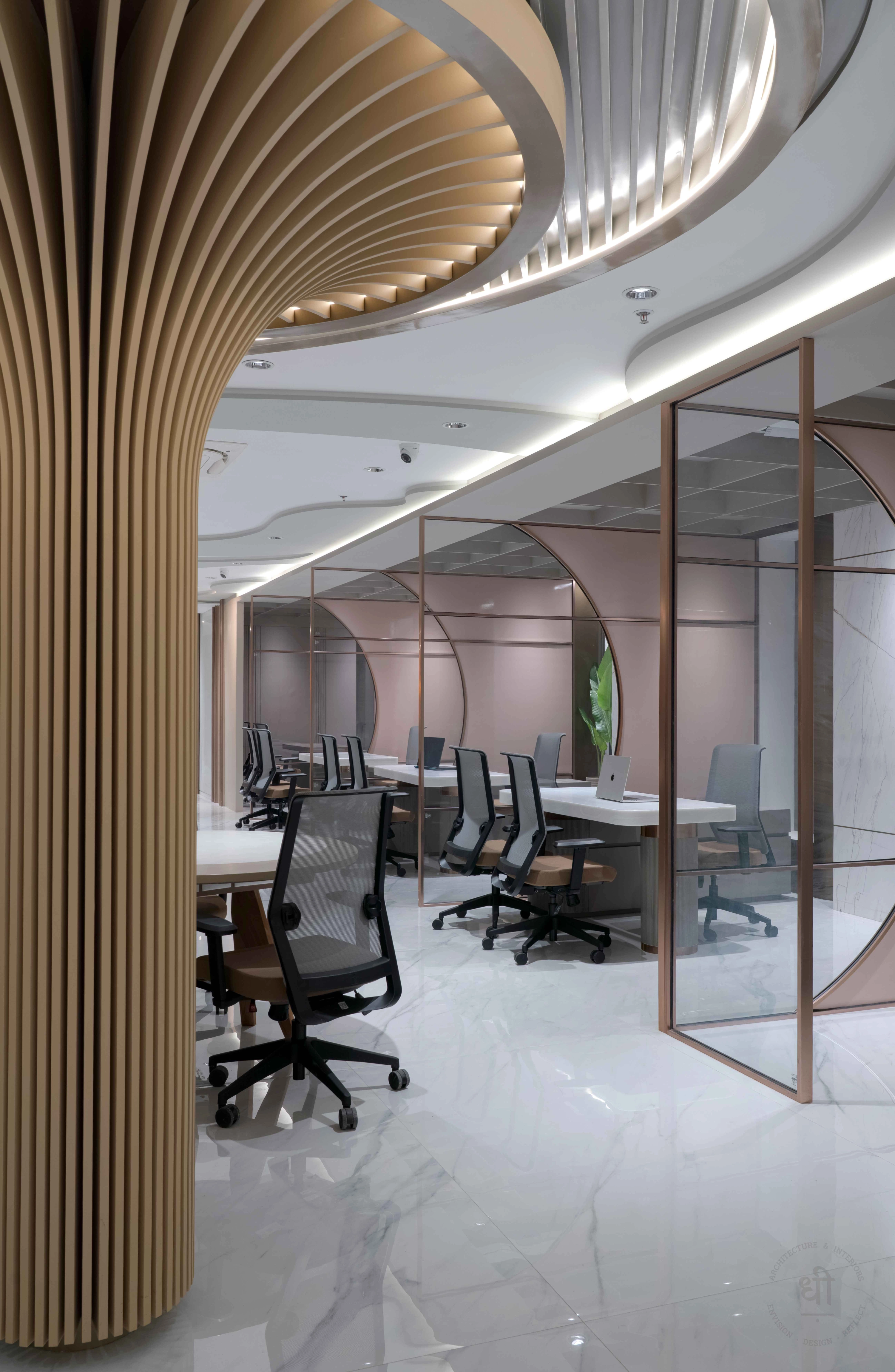
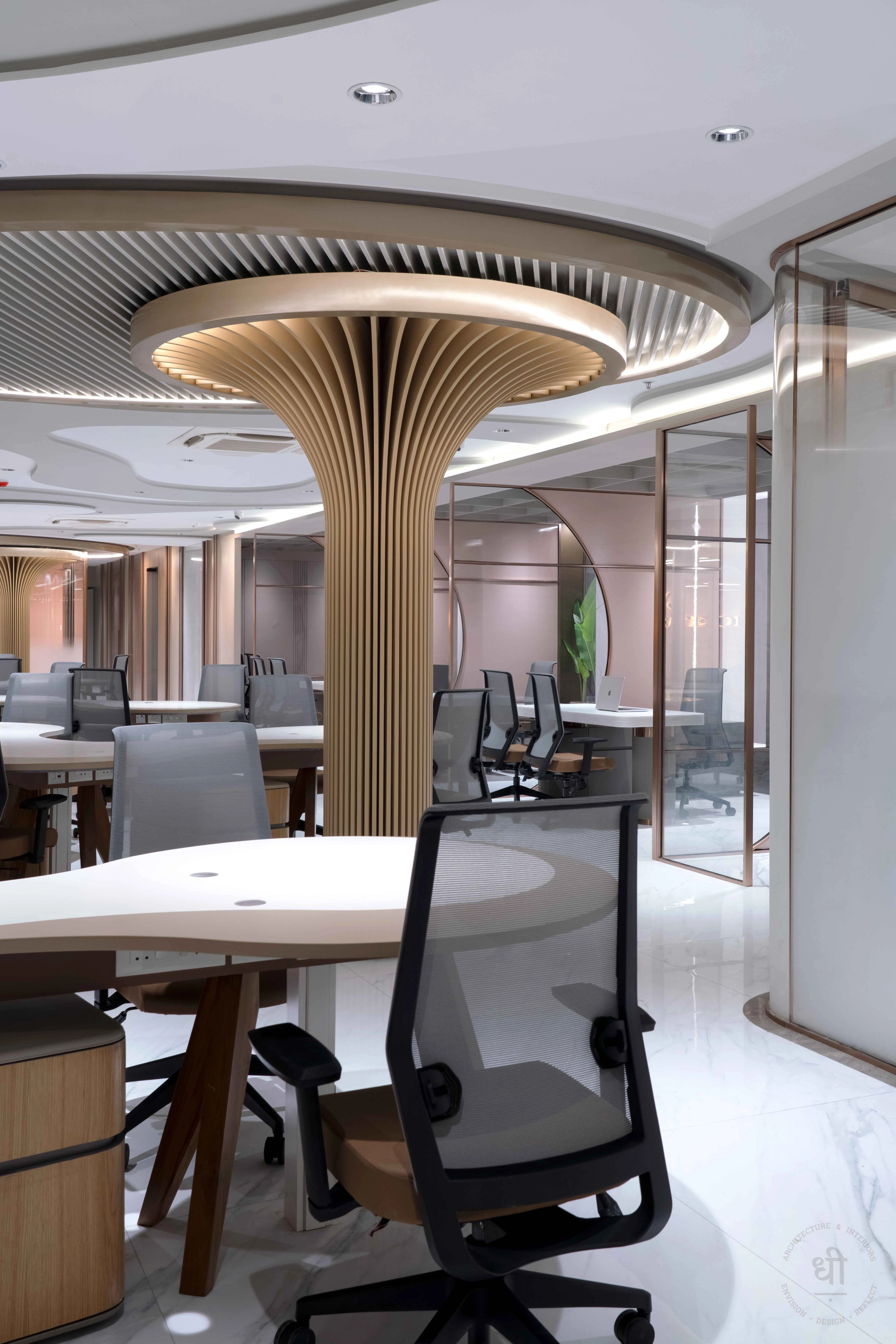
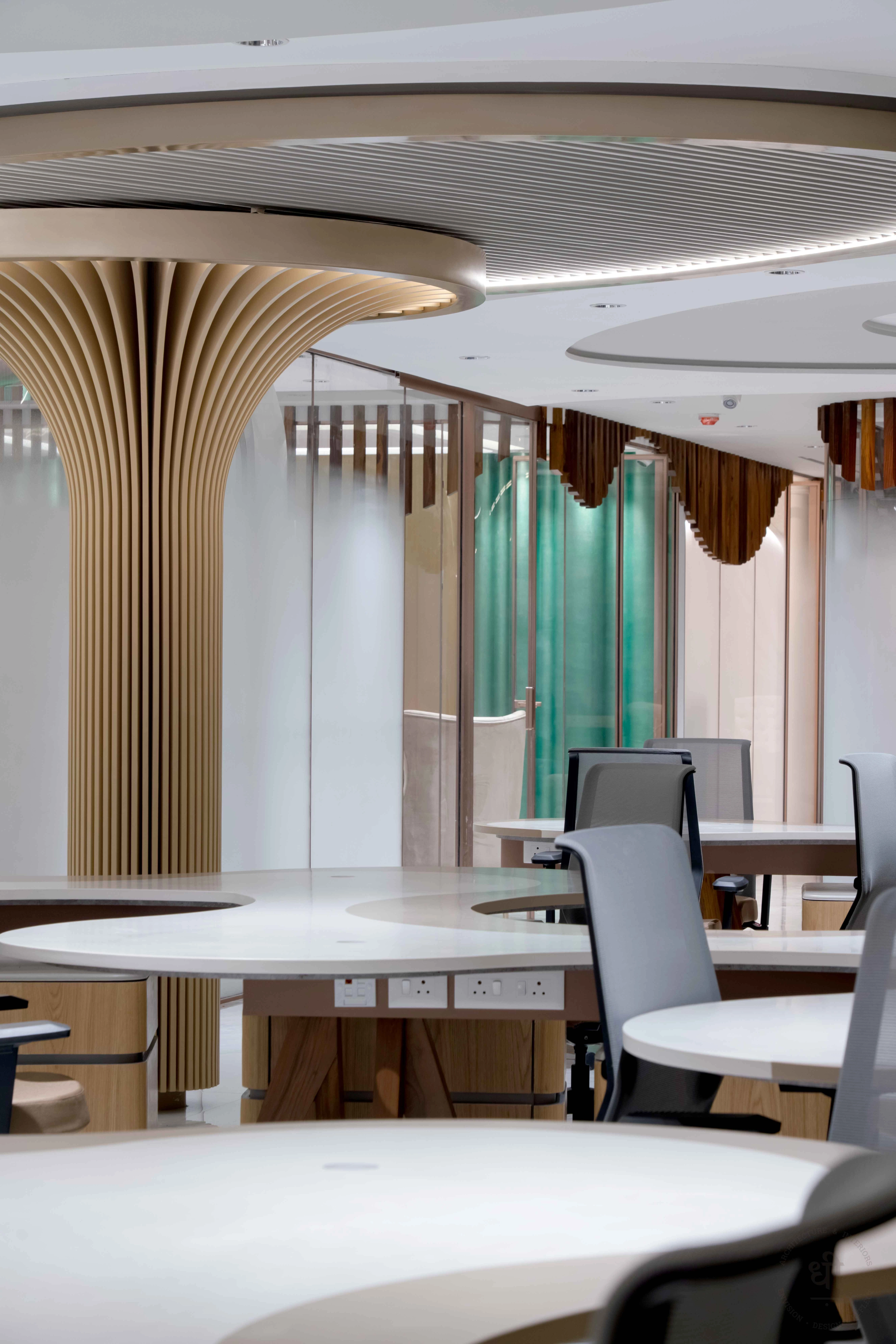
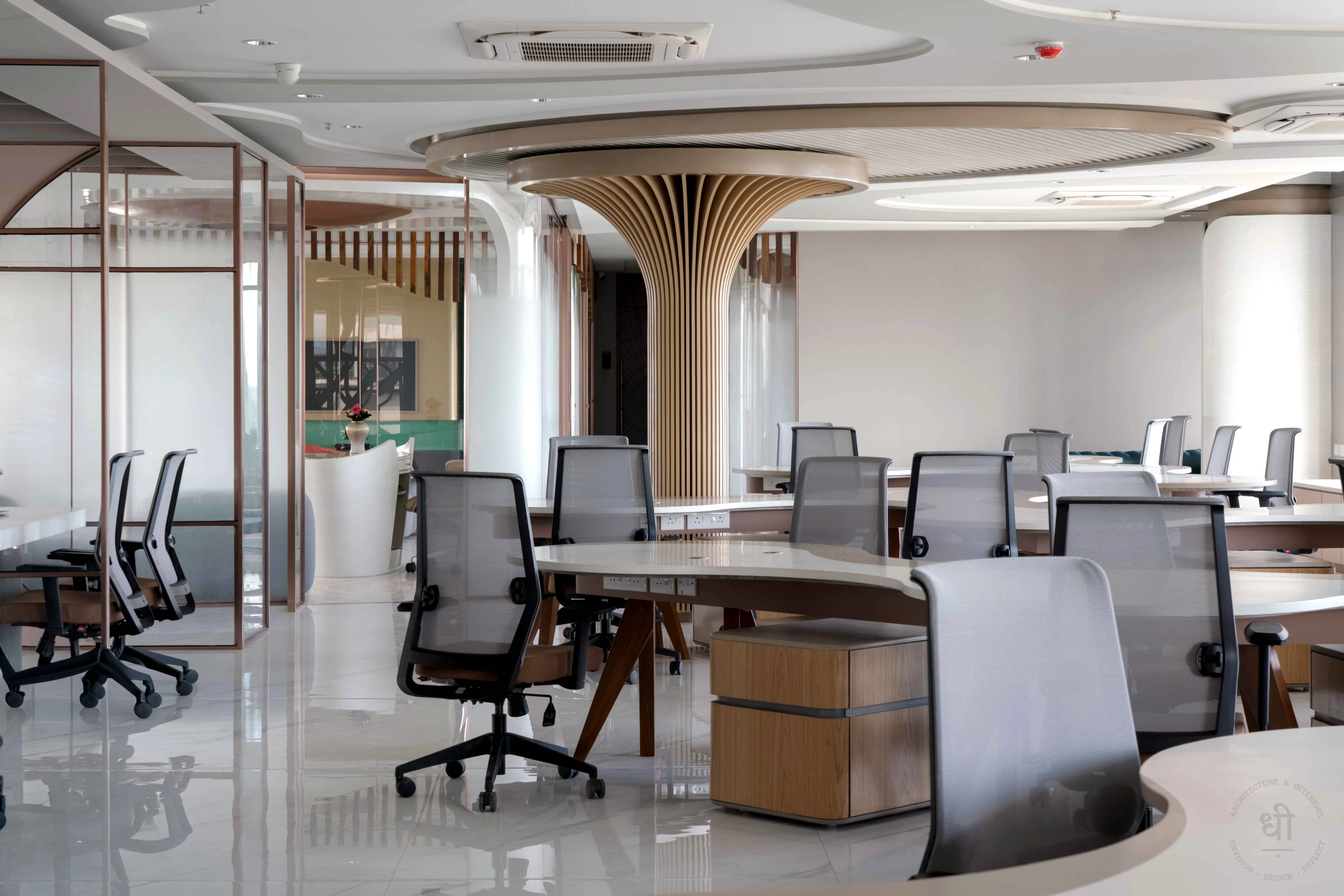
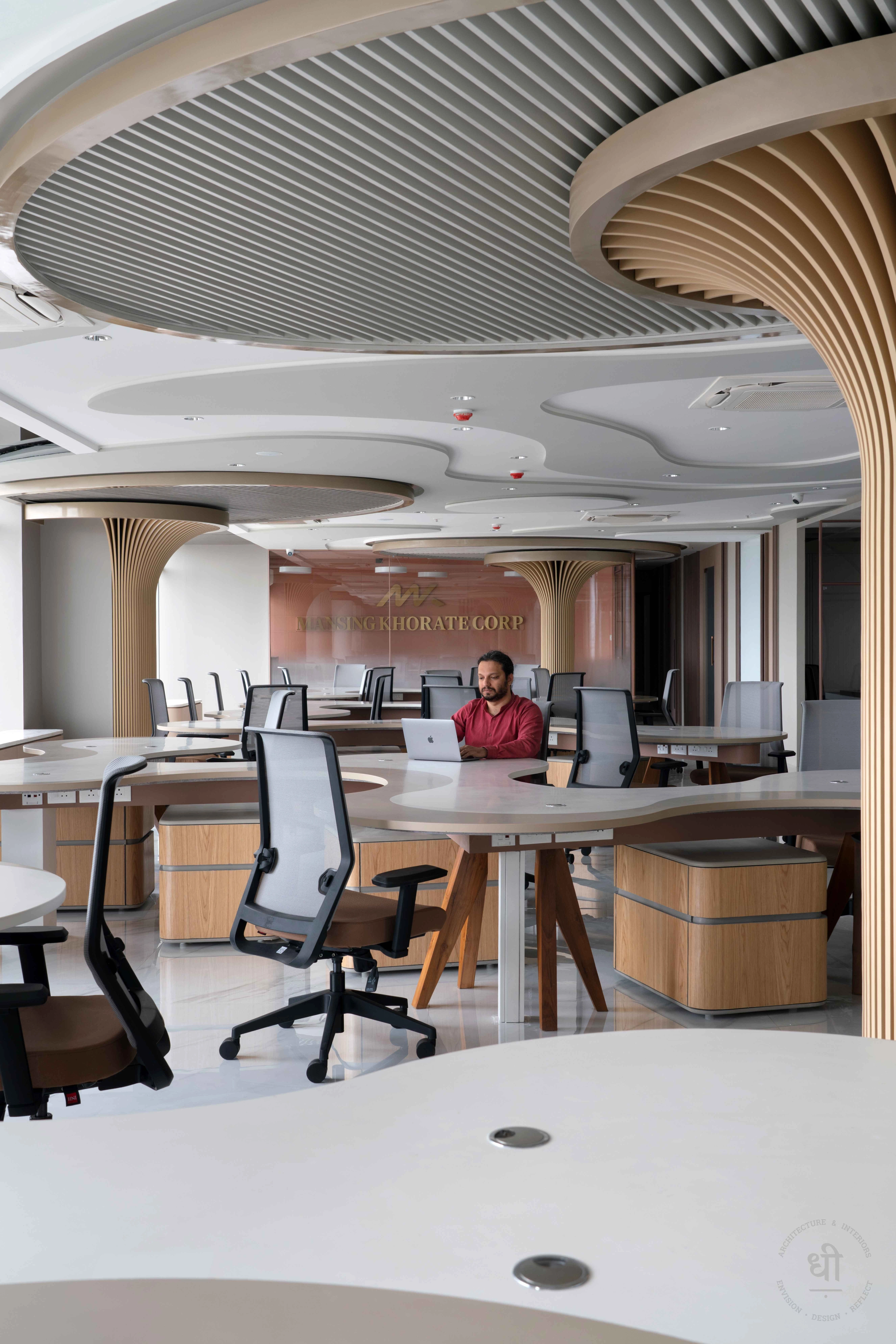
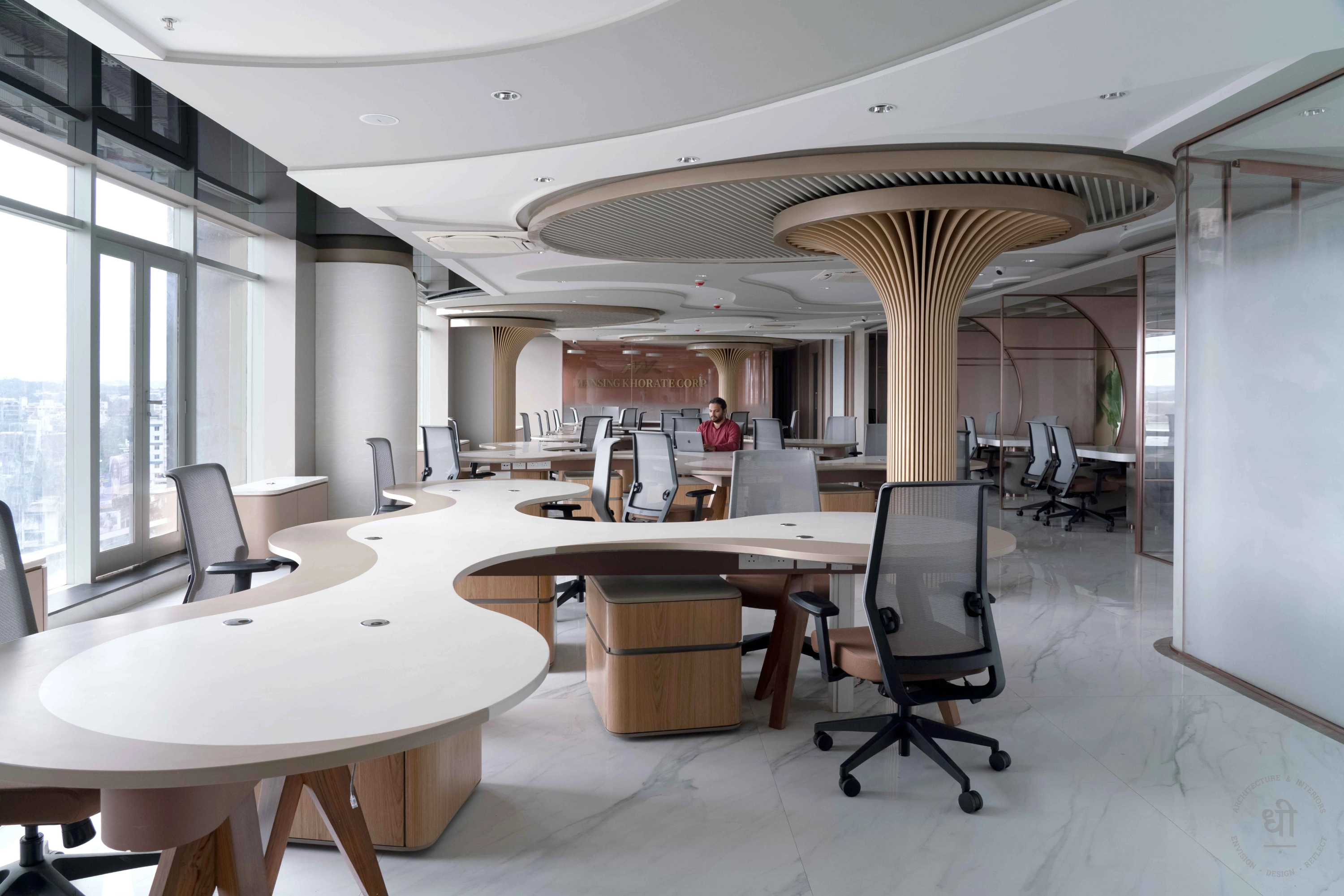
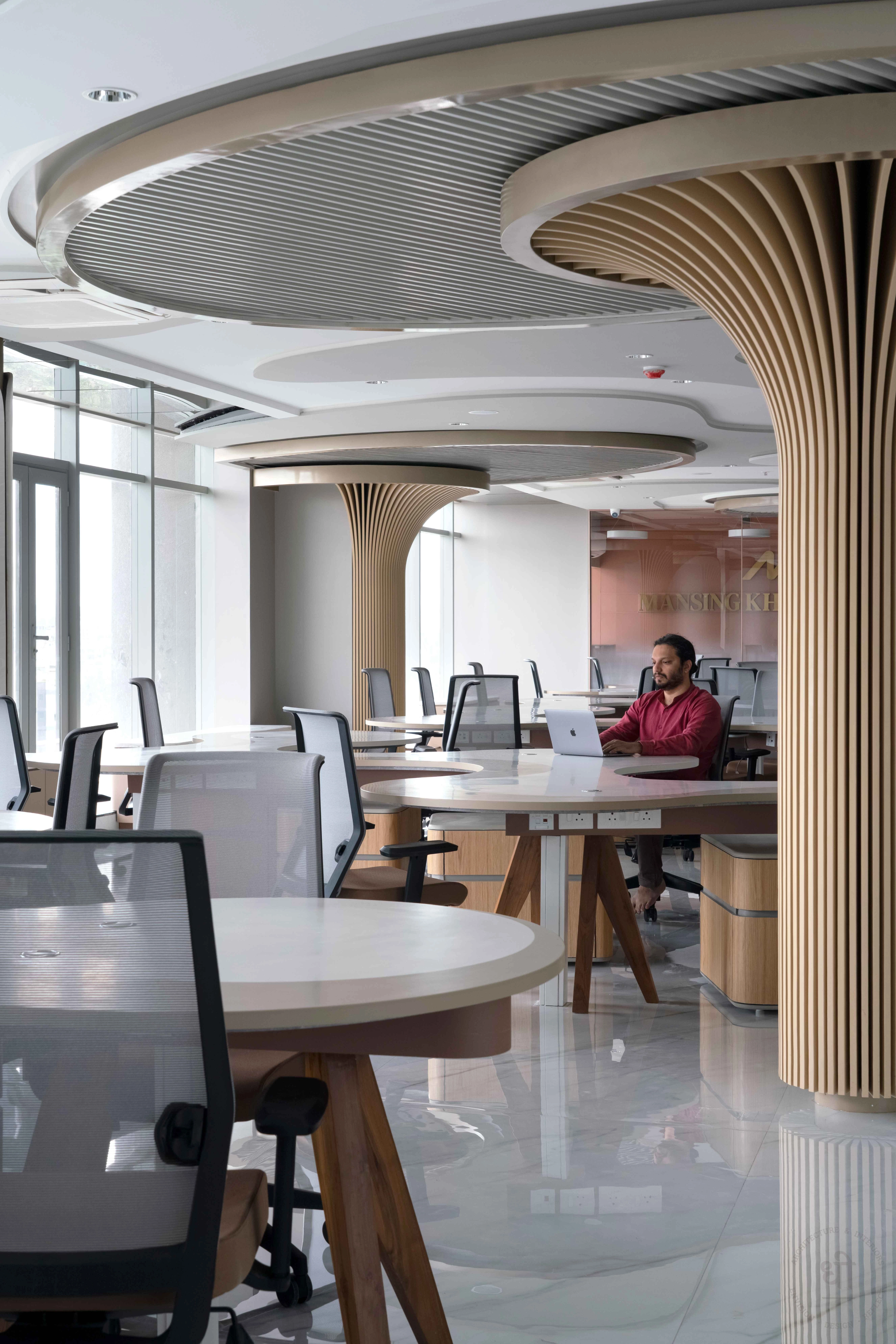
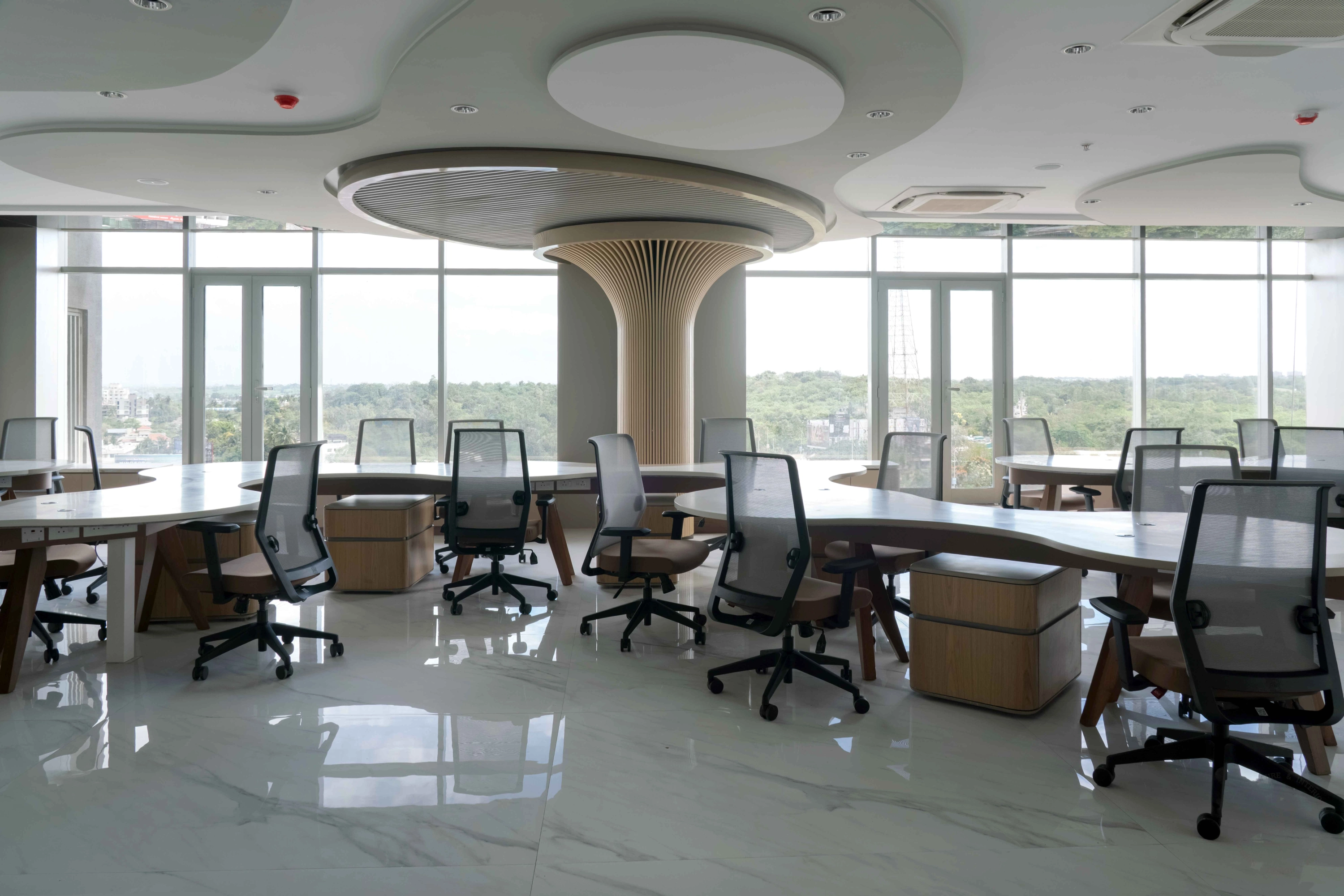
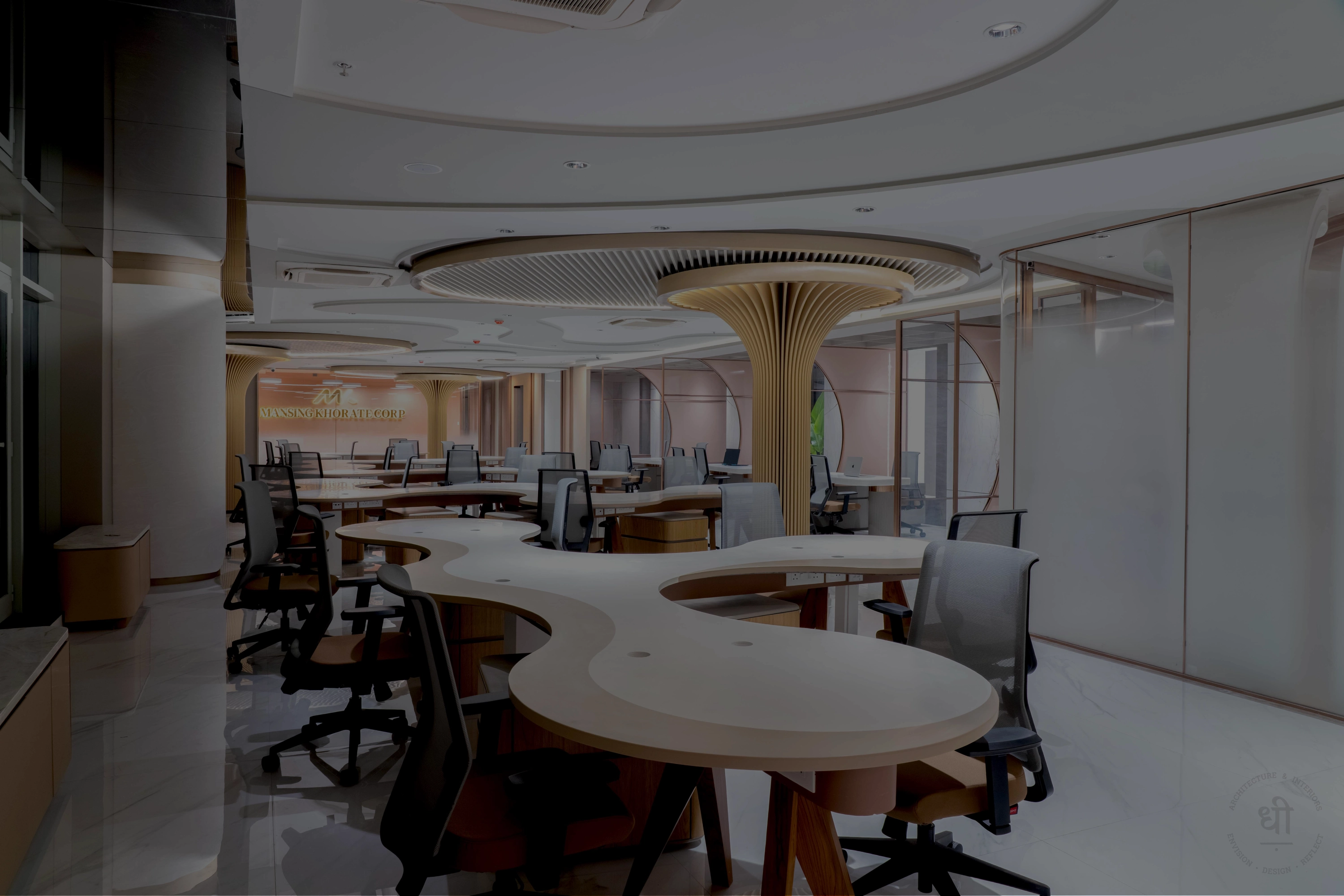
The first thing you notice is the columns. Sheathed in densely bundled timber slats that flare and
splay as they reach the ceiling — unmistakably abstracted from the sugarcane plant — they are
simultaneously structural and sculptural, an origin story told in warm blond wood. The idea is
audacious and quietly earned: a building that knows exactly who it belongs to.
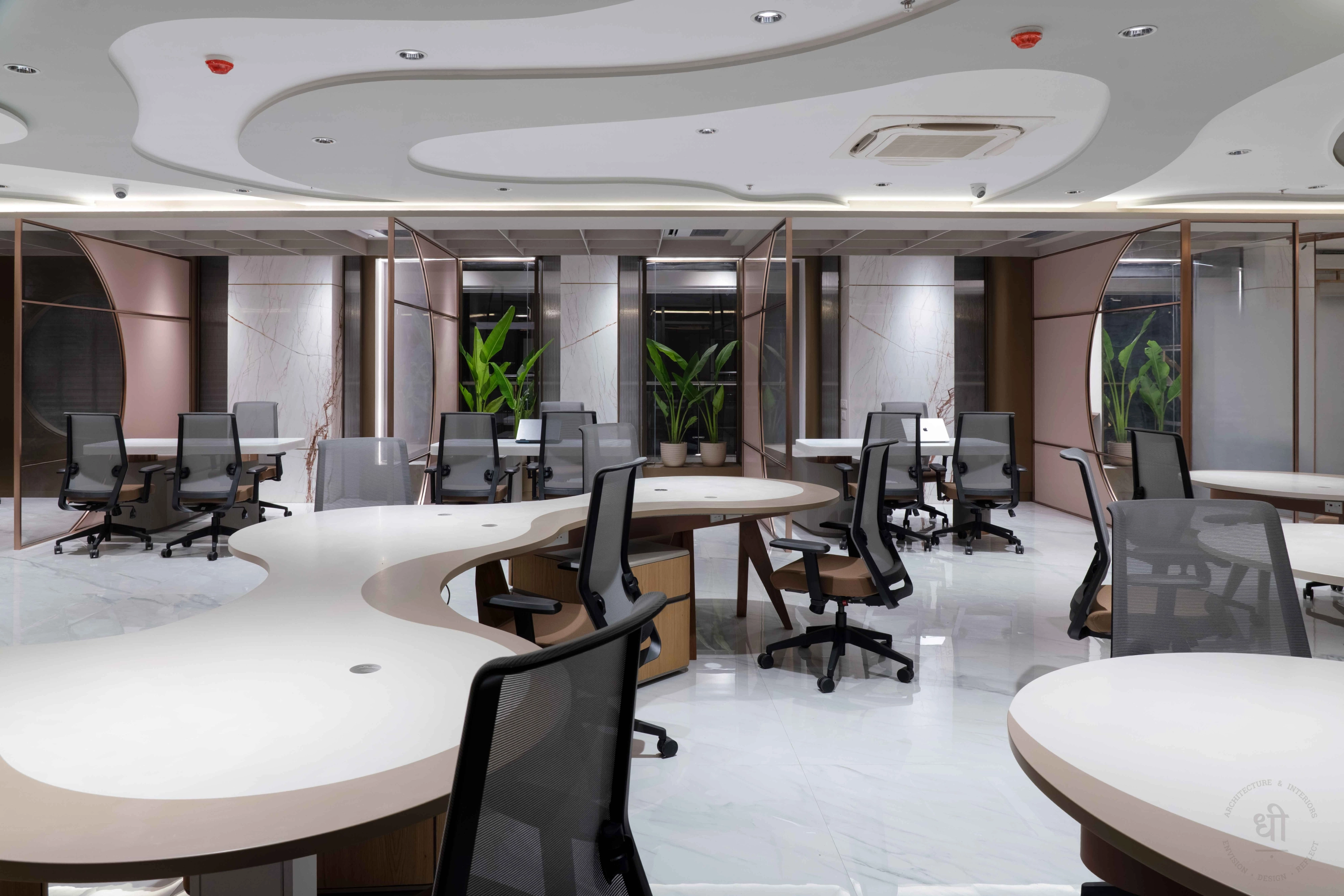
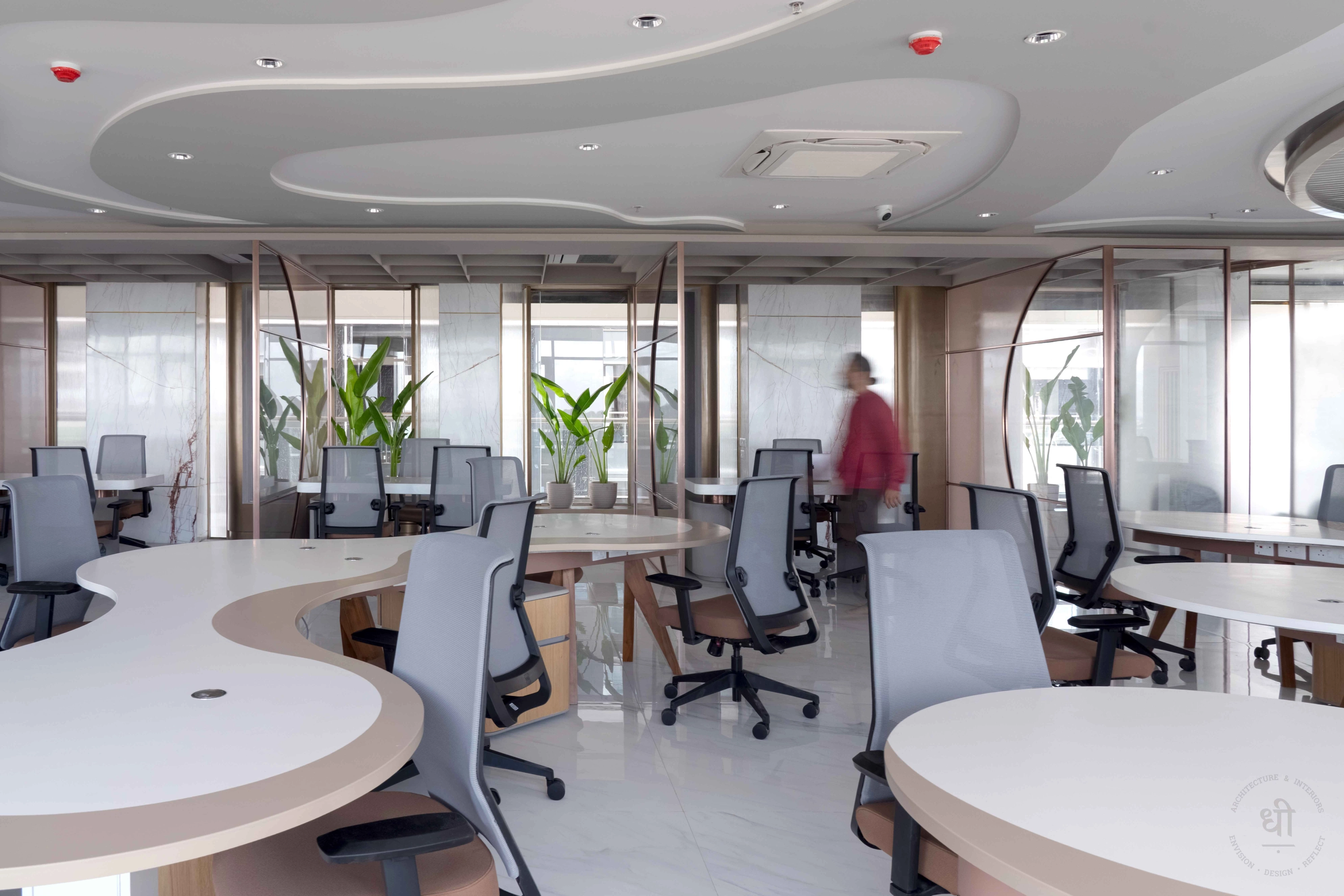
The open workstation floor embraces organic geometry as both aesthetic and ideology. Workstations
undulate in fluid, kidney-like forms — no hard corners, no territorial edges — their pale Corian
surfaces inviting the lateral drift of collaboration. The biomorphic ceiling, rippling in concentric
arcs of white plaster, reads as an abstract mural painted directly overhead: a living canvas above the
everyday.
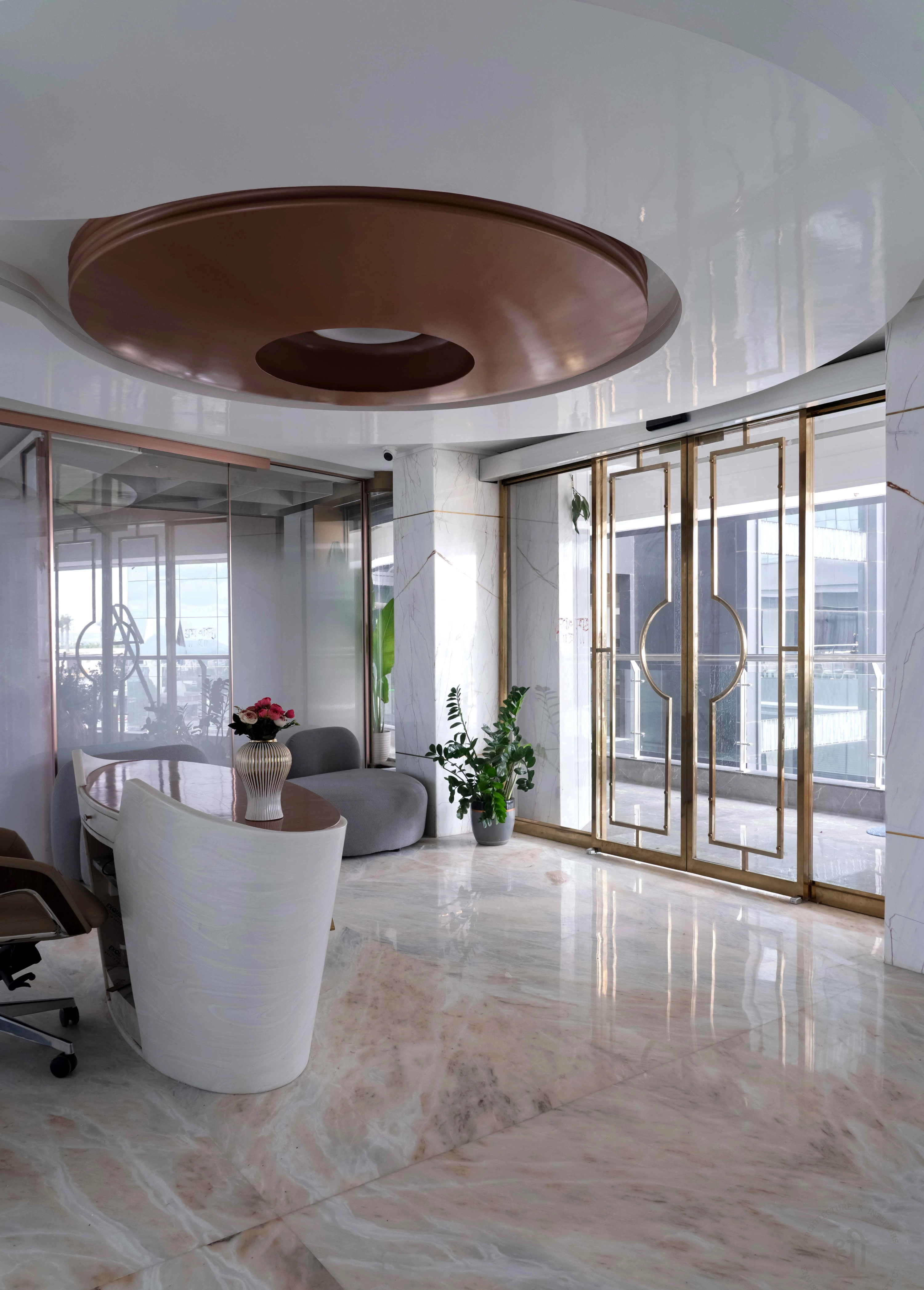
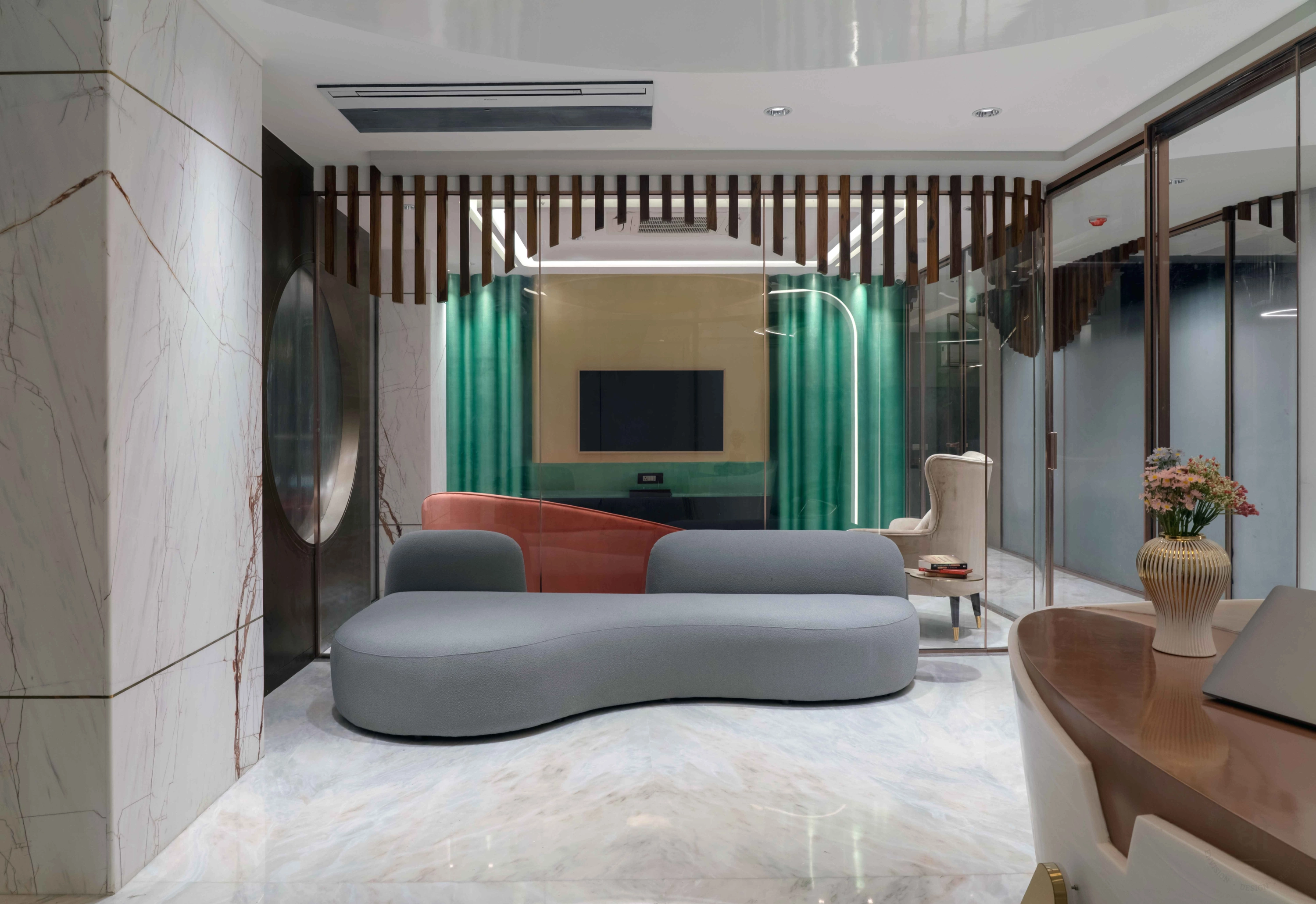
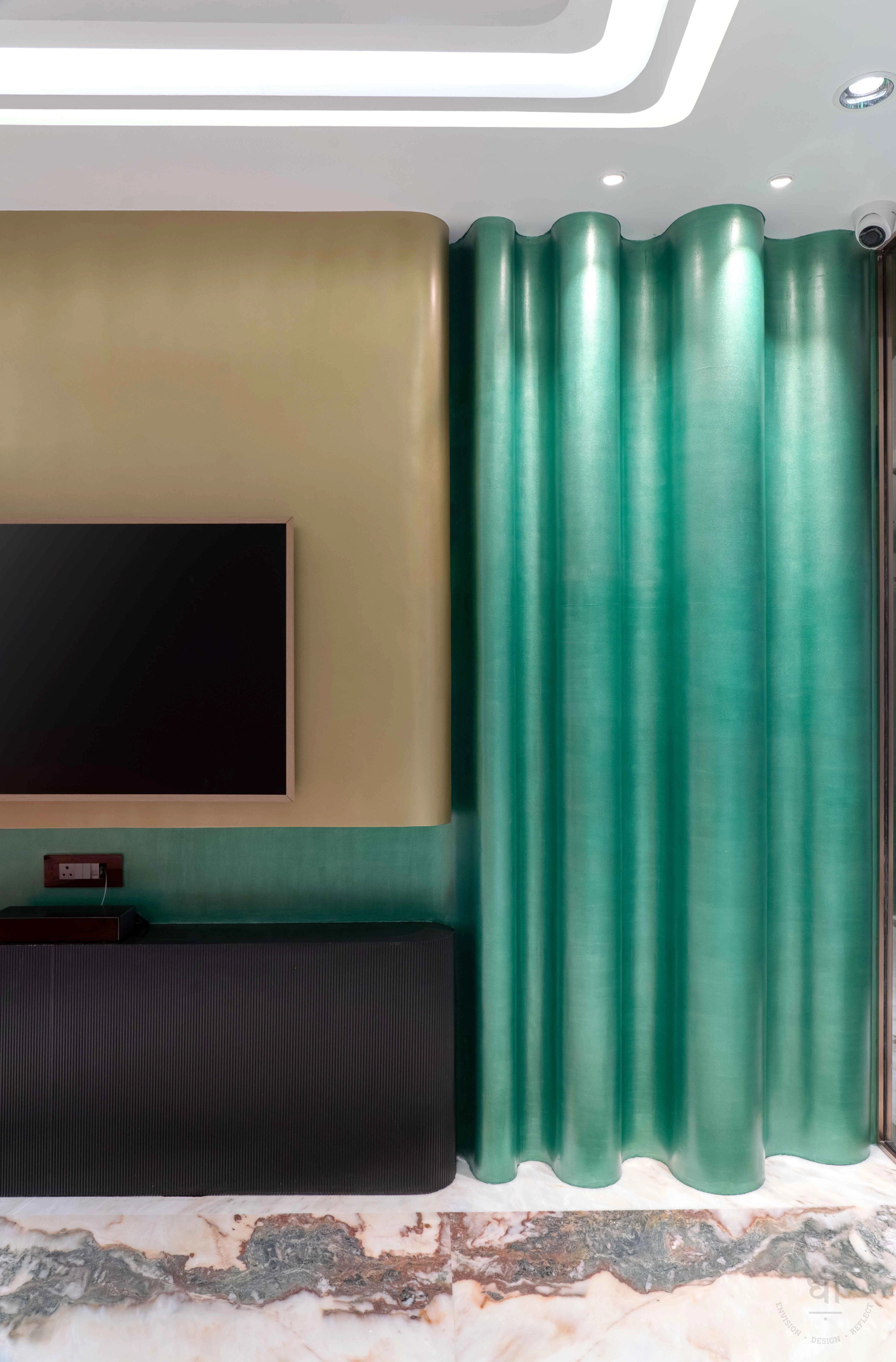
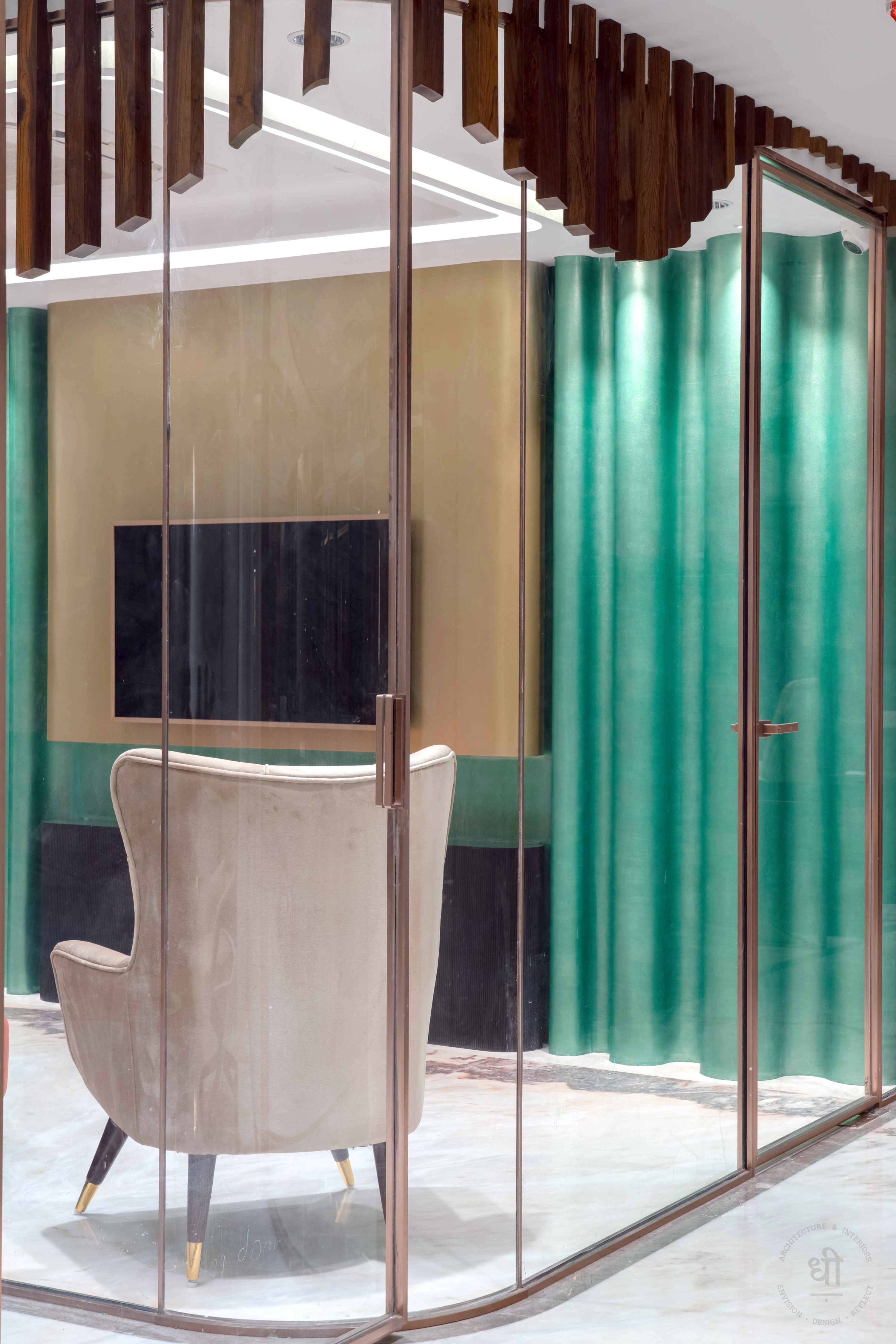
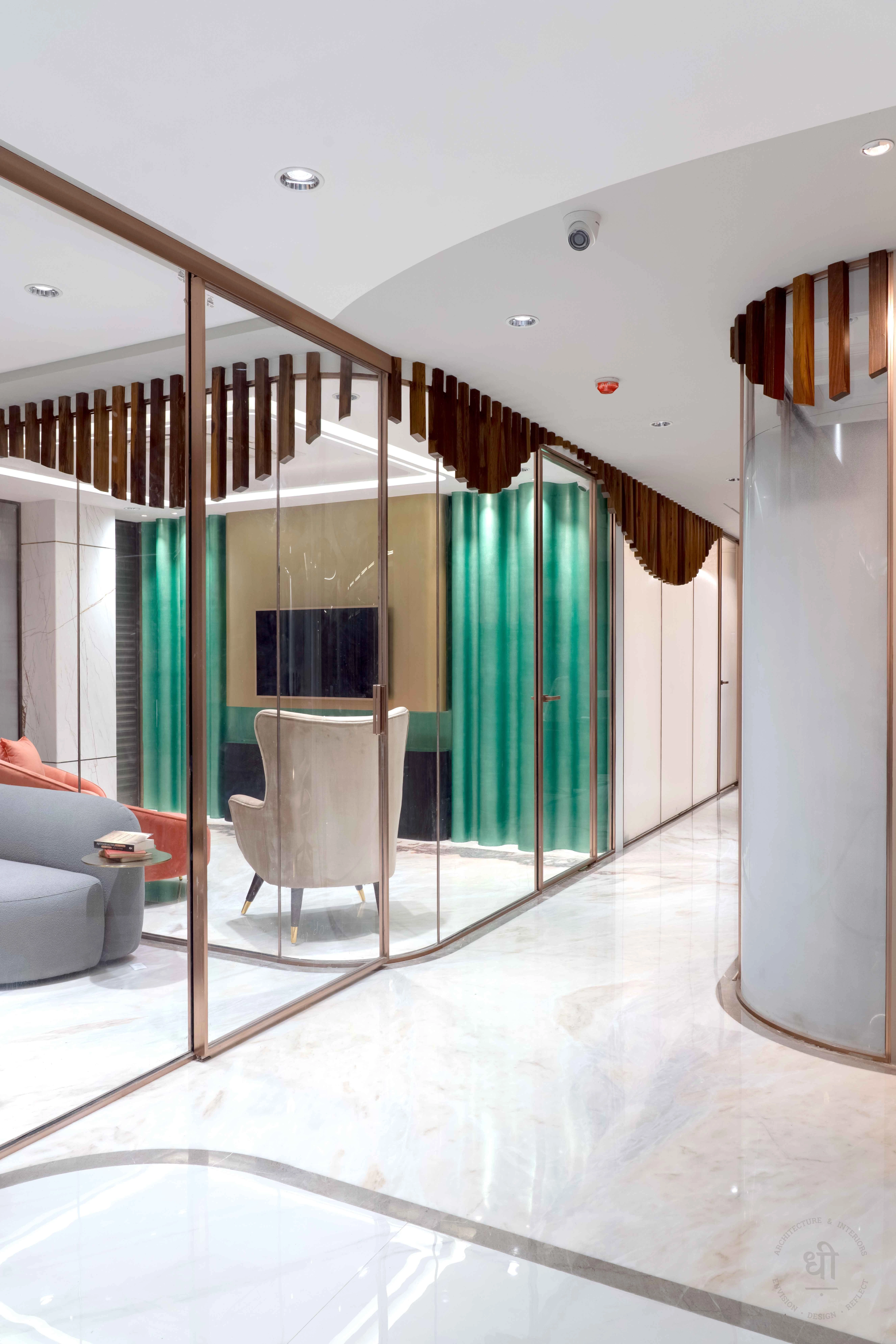
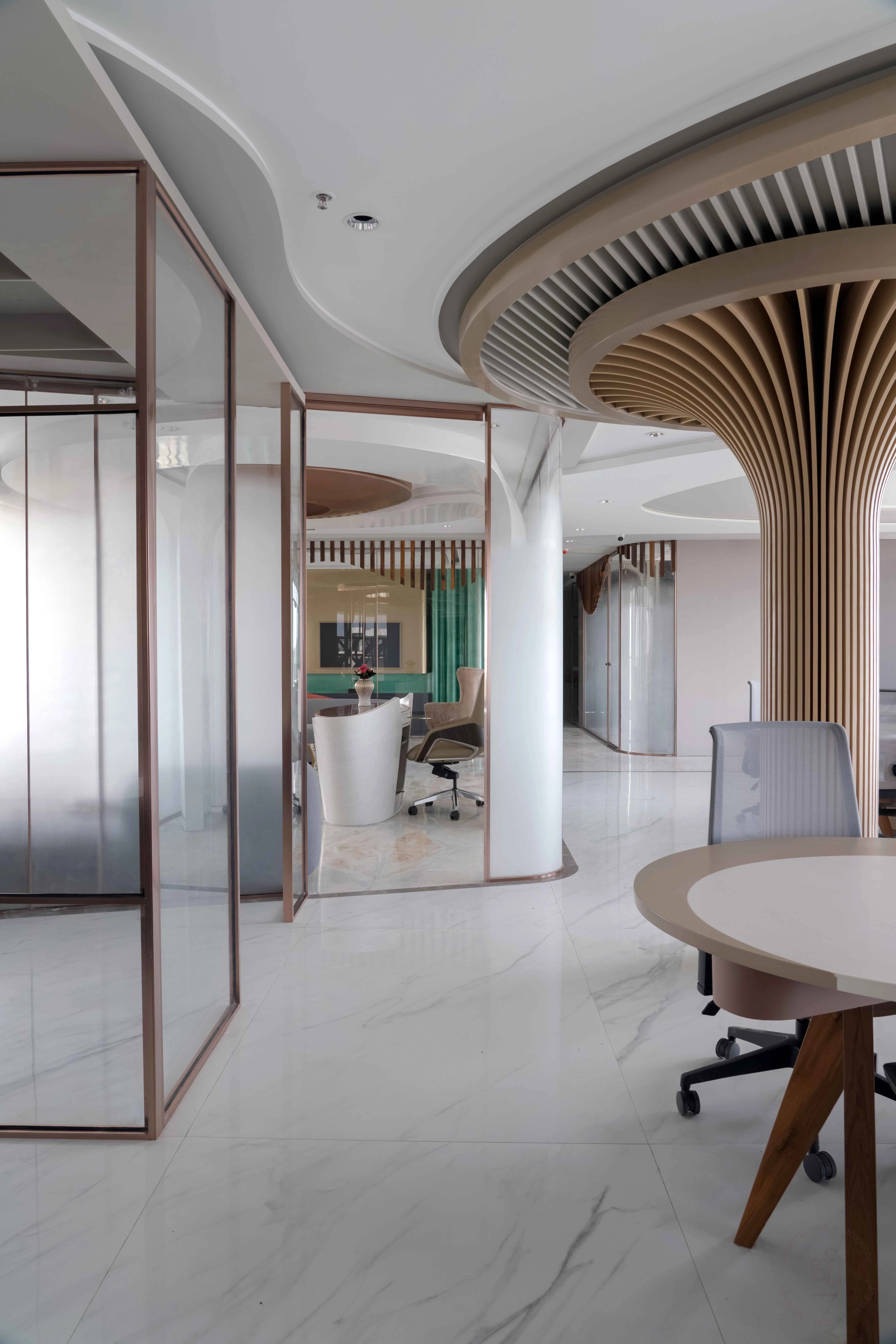
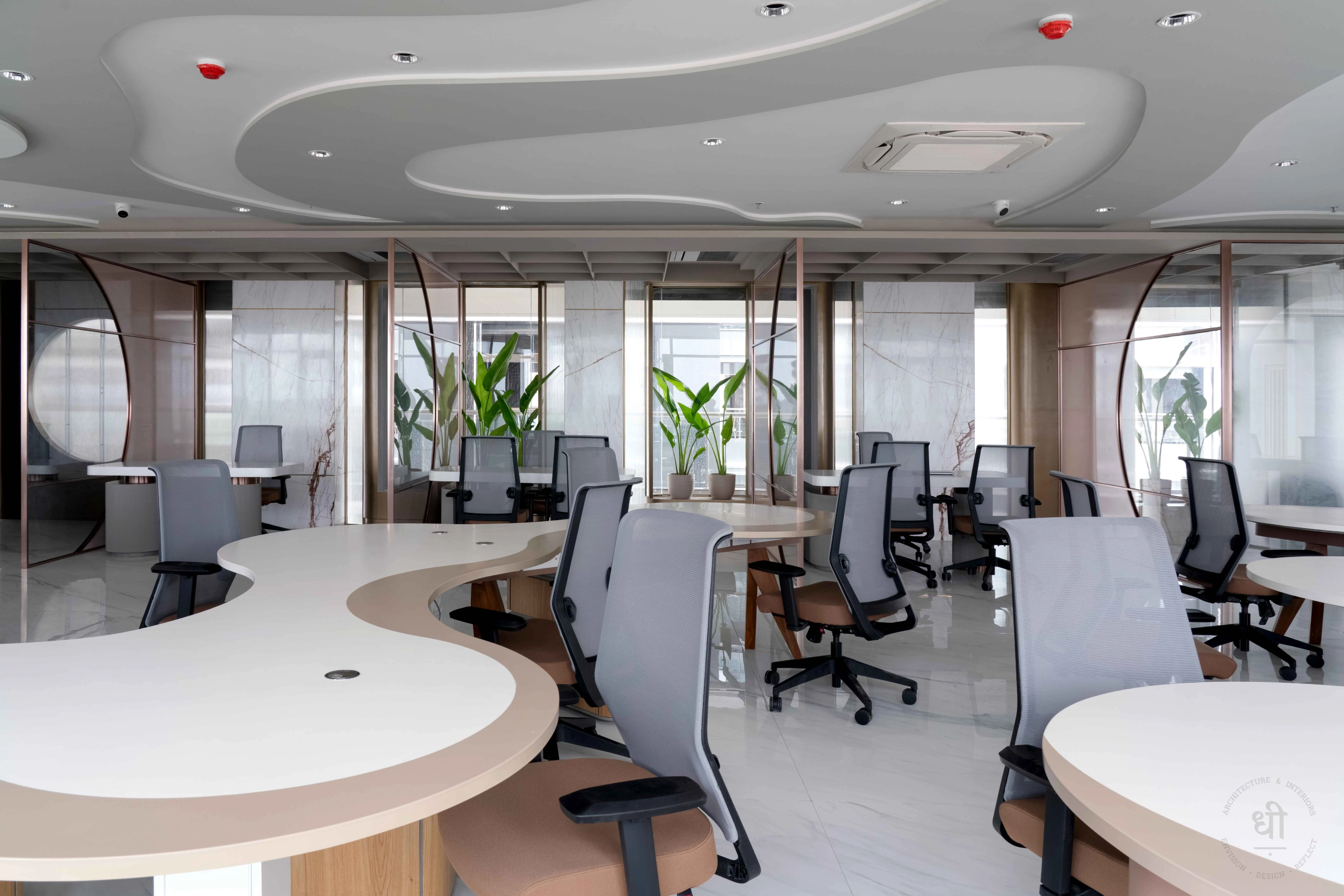
The palette is a study in restraint and warmth — warm white marble flooring, nude-pink accent walls,
rose-bronze metal framing on glass partitions, and the honeyed grain of oak cabinetry. Together they
establish a softly luminous interior that breathes without strain. Floor-to-ceiling glazing floods the
perimeter with daylight and frames a green urban canopy beyond, making the landscape a continuous
collaborator in the room's mood.
Manager cabins sit behind elegantly arched rose-bronze glass frames — transparent yet composed —
preserving uninterrupted horizon views while maintaining the open, airy register of the whole floor.
Bird-of-paradise plants punctuate corners with declarative vitality, bridging the nature narrative
from architectural metaphor to living presence.
This is a workspace that does not perform productivity — it cultivates it, the way a field cultivates
growth: through openness, rootedness, and the quiet intelligence of organic form.
Nature is not decoration here — it is the structural argument. Every curve, every slatted column,
every organic edge declares that the most productive environments are not engineered; they are grown.